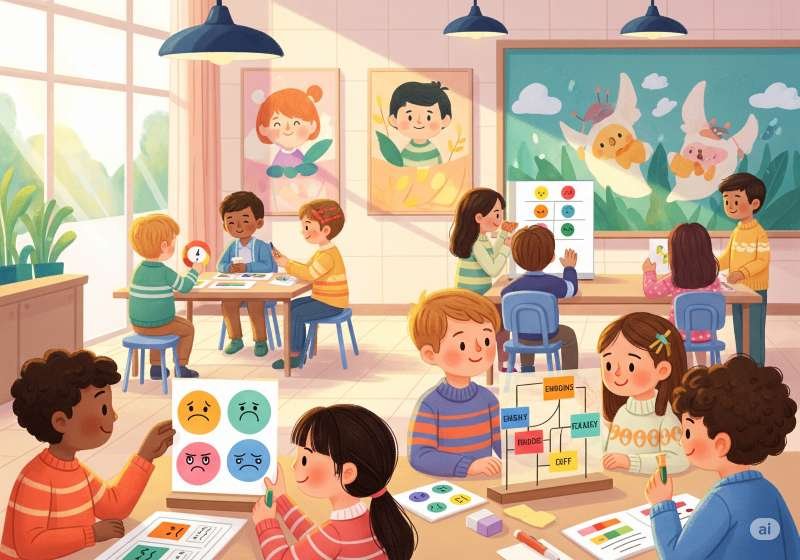
Emotional intelligence is one of the most important skills we can teach our children. It affects their relationships, academic success, and overall well-being throughout their lives. Learn how to nurture this crucial ability from an early age.
<strong>What is Emotional Intelligence?</strong>
Emotional intelligence (EI) consists of four key components:
<ol><li><strong>Self-Awareness</strong>: Understanding one's own emotions
</li></ol>
<ol><li><strong>Self-Management</strong>: Regulating emotions and behaviors
</li></ol>
<ol><li><strong>Social Awareness</strong>: Recognizing others' emotions and social cues
</li></ol>
<ol><li><strong>Relationship Management</strong>: Using emotional information to guide interactions
</li></ol>
<strong>Why Emotional Intelligence Matters</strong>
Children with higher emotional intelligence tend to:
- Have better academic performance
- Form stronger friendships and relationships
- Show greater resilience during challenges
- Experience less anxiety and depression
- Demonstrate better leadership skills as adults
- Have improved conflict resolution abilities
<strong>Age-Appropriate Emotional Development</strong>
<strong>Toddlers (2-3 years)</strong>
- Beginning to name basic emotions
- Learning that emotions are temporary
- Starting to understand cause and effect of emotions
- Developing early empathy and concern for others
<strong>Preschoolers (4-5 years)</strong>
- Expanding emotional vocabulary
- Understanding that people can feel multiple emotions
- Learning basic emotion regulation strategies
- Beginning to recognize emotions in others
<strong>School Age (6-12 years)</strong>
- Developing more sophisticated emotional understanding
- Learning cultural and social rules about emotions
- Building coping strategies for difficult emotions
- Understanding the connection between thoughts and feelings
<strong>Strategies for Building Emotional Intelligence</strong>
<strong>1. Model Emotional Intelligence</strong>
Children learn by watching. Demonstrate:
- Healthy ways to express emotions
- Problem-solving during conflicts
- Empathy and understanding toward others
- Self-reflection and emotional awareness
<strong>2. Create an Emotionally Safe Environment</strong>
- Accept all emotions as valid (while setting limits on behavior)
- Avoid dismissing or minimizing feelings
- Encourage emotional expression through words, art, or play
- Provide comfort during difficult emotions
<strong>3. Teach Emotion Vocabulary</strong>
Help children expand their emotional language:
- Read books that explore different emotions
- Use emotion words throughout daily conversations
- Play games that involve identifying feelings
- Create an emotion chart or wheel
<strong>4. Practice Emotion Identification</strong>
- Ask "How do you think they're feeling?" about characters in books or movies
- Help children name their own emotions throughout the day
- Use mirrors to show facial expressions for different emotions
- Play emotion charades or guessing games
<strong>5. Teach Regulation Strategies</strong>
Help children learn to manage difficult emotions:
- Deep breathing exercises ("smell the flower, blow out the candle")
- Progressive muscle relaxation
- Counting to ten when angry
- Taking a break in a calm-down space
- Physical activity to release energy
<strong>Practical Daily Activities</strong>
<strong>Morning Check-ins</strong>
Start each day by asking:
- "How are you feeling this morning?"
- "What emotions do you think you might experience today?"
- "How can we help you have a good day?"
<strong>Emotion-Rich Conversations</strong>
Throughout the day:
- Narrate emotions during activities
- Discuss characters' feelings in stories
- Talk about your own emotions appropriately
- Validate and explore their emotional experiences
<strong>Bedtime Reflections</strong>
End the day with:
- "What emotions did you feel today?"
- "What was challenging, and how did you handle it?"
- "What are you grateful for today?"
- "How can tomorrow be even better?"
<strong>Addressing Common Challenges</strong>
<strong>Tantrums and Meltdowns</strong>
- Stay calm and present
- Validate the underlying emotion
- Help them identify what they're feeling
- Teach alternative ways to express needs
<strong>Aggressive Behavior</strong>
- Set clear boundaries about acceptable behavior
- Help them understand the emotion behind the aggression
- Teach appropriate ways to express anger
- Practice problem-solving skills
<strong>Emotional Withdrawal</strong>
- Respect their need for space while staying available
- Use non-verbal connection (sitting nearby, gentle touch)
- Offer various ways to express emotions (drawing, writing, talking)
- Avoid pushing them to talk before they're ready
<strong>Supporting Different Temperaments</strong>
<strong>Sensitive Children</strong>
- Validate their deep feelings
- Teach extra coping strategies
- Prepare them for emotional situations
- Help them see sensitivity as a strength
<strong>Intense Children</strong>
- Help them channel intensity positively
- Teach extra regulation skills
- Provide physical outlets for emotions
- Celebrate their passion and enthusiasm
<strong>Reserved Children</strong>
- Respect their processing style
- Offer multiple ways to express emotions
- Don't force emotional expression
- Model emotional openness without pressure
<strong>Building Empathy</strong>
Help children develop empathy through:
- Volunteer activities appropriate for their age
- Discussing how others might feel in different situations
- Reading diverse books with varied perspectives
- Encouraging acts of kindness and consideration
<strong>When to Seek Support</strong>
Consider professional help if your child:
- Shows persistent emotional difficulties
- Has trouble forming relationships with peers
- Displays extreme emotional reactions regularly
- Seems unable to learn regulation strategies
- Shows signs of anxiety or depression
<strong>The Long-Term Impact</strong>
Investing in your child's emotional intelligence pays dividends throughout their life. Children who learn these skills early are better equipped to:
- Navigate complex social relationships
- Succeed academically and professionally
- Maintain mental health during challenges
- Build meaningful, lasting relationships
- Contribute positively to their communities
Remember, building emotional intelligence is an ongoing process that takes time, patience, and consistency. Every interaction is an opportunity to help your child grow emotionally and develop these crucial life skills.
Building Emotional Intelligence in Children
Learn practical strategies for developing emotional intelligence in children, from toddlers to school age, with age-appropriate activities and guidance.
DR
Dr. Elena Rodriguez
Licensed Therapist
·
311 views
·
5 min read